nobody on linkedin called out my AI slop
4 min read
If you interacted with my last LinkedIn post, I owe you an apology. It was 100% AI slop.
This post isn't, but here's why I did it.
Vibe shift
I don't scroll or post to LinkedIn as much as I used to, but when I do I've started to feel like most of the posts there are... well... AI slop.
LinkedIn content has always been performative and formulaic, but I couldn't tell if the proliferation of obvious slop was an algorithmic choice or a user one.
One day at the gym, I had an idea: What if I asked ChatGPT to take everything it knows about me and make "really good LinkedIn slop?"
So I did.
The experiment
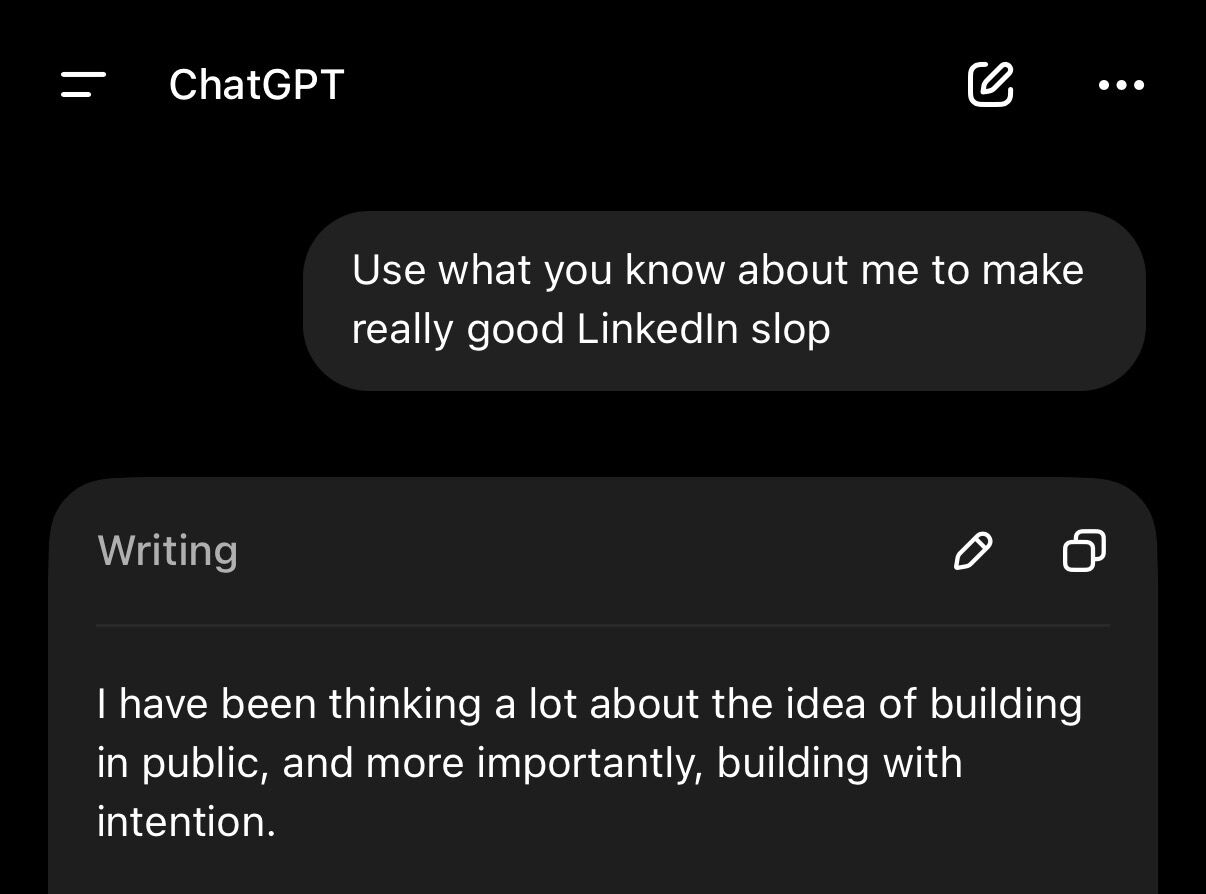
That's it. That's my entire prompt. But, because I know images help with engagement, I asked for one of those too.
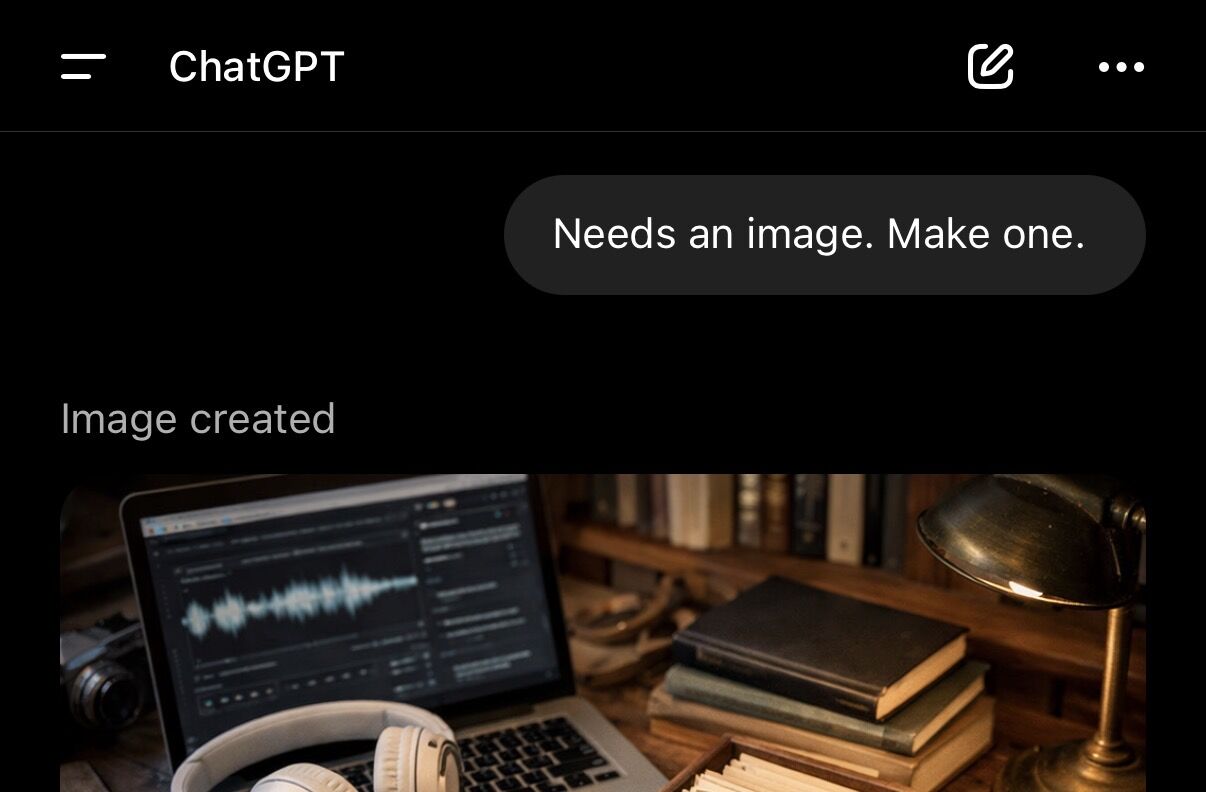
I didn't do any editing, rewriting or regenerating. I just took both outputs and posted them straight to LinkedIn without any additional thought.
The result
The experiment was simple: how well does the lowest possible effort LinkedIn post perform?
Part of me hoped it would flop. That the slop would be obvious enough to tank on its own. Instead, it did better than many of my real posts. Depending on your perspective, you might find this very encouraging or deeply discouraging.
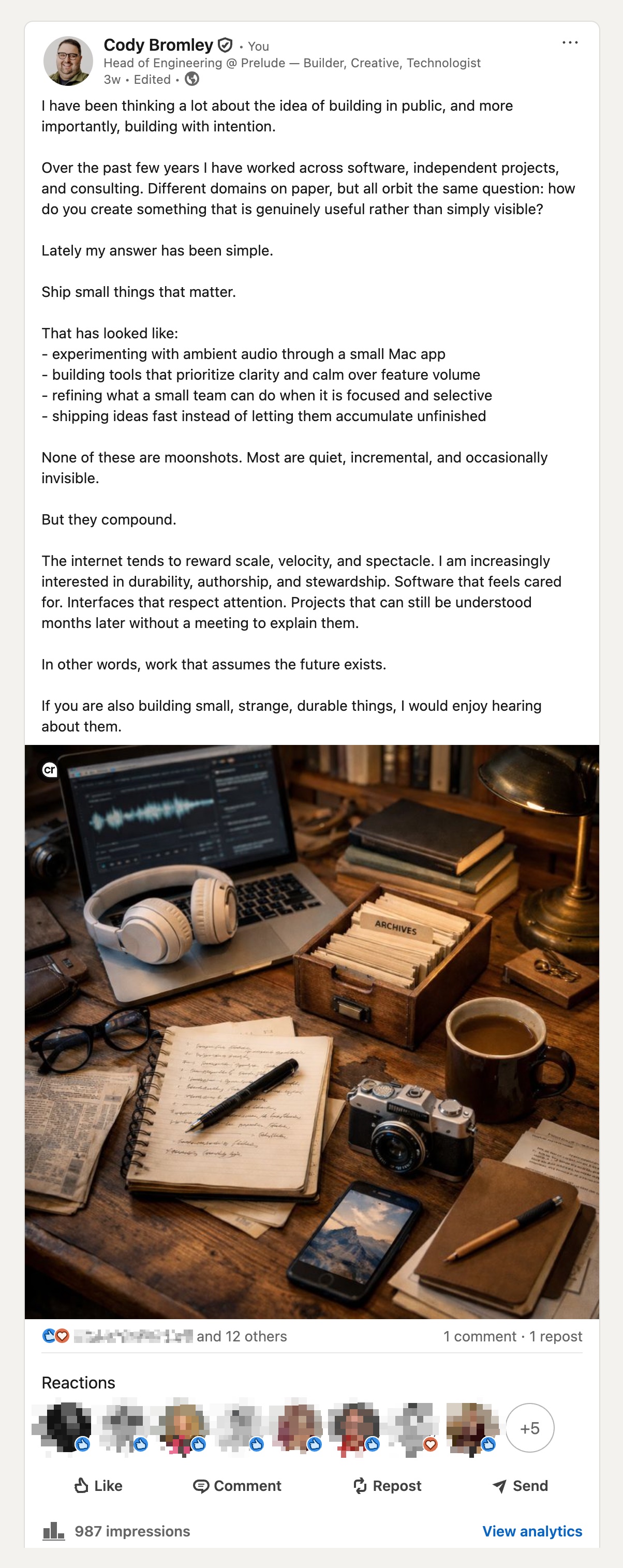
Compared to what I'd posted in the last 12 months, my slop post performed above average in likes and views. As a creator-ish person, I don't like this result, especially because it makes me question the value of doing the real work. You don't have to like slop, but it's hard to deny it does serious numbers, and no amount of my disdain for it changes that.
The post was neither "great" nor even "good," but if unedited slop can do this well I have to acknowledge it's doing something right that I otherwise do wrong.
Deep down, I really wanted someone to call me out on this. The writing style was plain and had plenty of AI writing cliches that I think I'd have spotted without the image. And as a former journalist, I hoped my unexplained use of an Oxford comma would stand out.
Before I posted, I also considered, but chose not to, launder the metadata of the image that ChatGPT created for me. If you clicked or tapped on it, you would see a very visible Content Credentials watermark that clearly said it was AI-generated by ChatGPT.
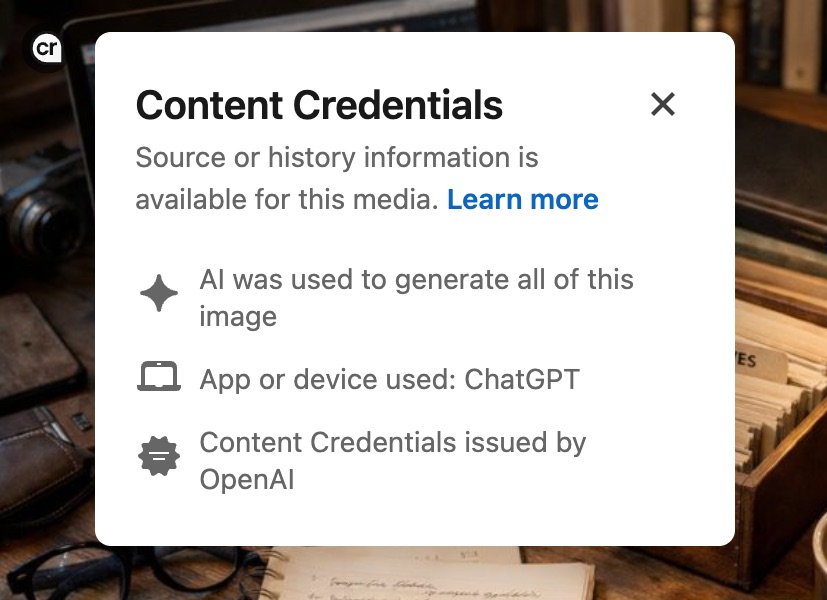
Nobody noticed any of it. Or if they did, nobody said anything to me. That's maybe the most telling part. Slop is becoming so prevalent, and silently acceptable, that you don't even have to hide it well.
What I think this means
I don't know exactly what lesson to draw from this, but I have two ideas:
1. Your rough draft is enough
For someone who posts as sporadically as I do, this makes a pretty strong case that I need to lower my standard of what is "postworthy," because the algorithm's standards are simply not that high.
Perfectionism is just procrastination with an ego.
2. People actually like popcorn movies
AI writing is incredibly derivative and formulaic, much like superhero and horror films. Yeah, they don't win Oscars, but they put butts in seats.
There is a kind of comfort in familiar, almost predictable content that doesn't challenge your expectations. Most LinkedIn slop is smooth, inoffensive and easy-to-like because it reinforces your view of the world. I'm not saying this is good, but it's not always bad either.
What I'm not saying
I'm not advocating for people to post more AI slop, or re-use my prompt to fool their networks like I did, but I do think we should be talking about it more and understanding that some people actually prefer the AI slop because it's more bland and non-toxic than real effort by real people.
I do, however, owe sincere apologies to Sam Knecht and Carlos Moreno, who are both very nice and generous people who saw my slop as a genuine post from me online and left very kind comments about it. You are excellent humans who should never change. I absolutely owe you both a coffee sometime soon.
P.S. - If either of you counter-slop'd your comments, I owe you shots of Don Julio instead!