Suggested watch for anyone who loves design, classic Apple stuff and creative process (a bullseye for me). In case you didn’t know, my blog’s logo is my own homage to Kare’s original icons for the Mac.
Archive
-
'Til the Clouds Come Home
Continue reading →My family first got online with Prodigy dial-up when I was 8. We connected to it via a local phone number, and so I thought that meant the offices of our local phone operator down the street was where “internet” lived. As I got older I began to understand it was far more complex than that.
One of my next-door neighbors growing up was a tall man named Craig. He spoke in a loud, but friendly, North Carolina accent that likely wouldn’t make you think he was the kind of guy who gets really into computers. With his characteristic strawberry-blond horseshoe mustache, he looked, talked and even dressed like a long-lost cousin of Dale Earnhardt.
But in the same way my dad just knew how to work on any car, Craig knew computers. Every so often he’d help my family out, upgrading our first desktop from a 2GB hard drive to 8GB and later helping us make the jump from Windows 95 to Windows 98.
I’ve been thinking about Craig recently because he was the first person I ever knew who worked in a data center. When I think about data centers, I still picture them exactly the way he described them: large, cold rooms filled with rows of whirring computers packed into racks and watched over day and night by people like him.
I can’t remember where Craig worked, and I may not have known at the time. For all I know, what he oversaw was a private network for a single company and not even part of the public internet. But the image sticks with me because it was likely the first time I understood, even vaguely, that rooms full of computers somewhere were doing something important enough that somebody had to watch over them day and night.
-
-
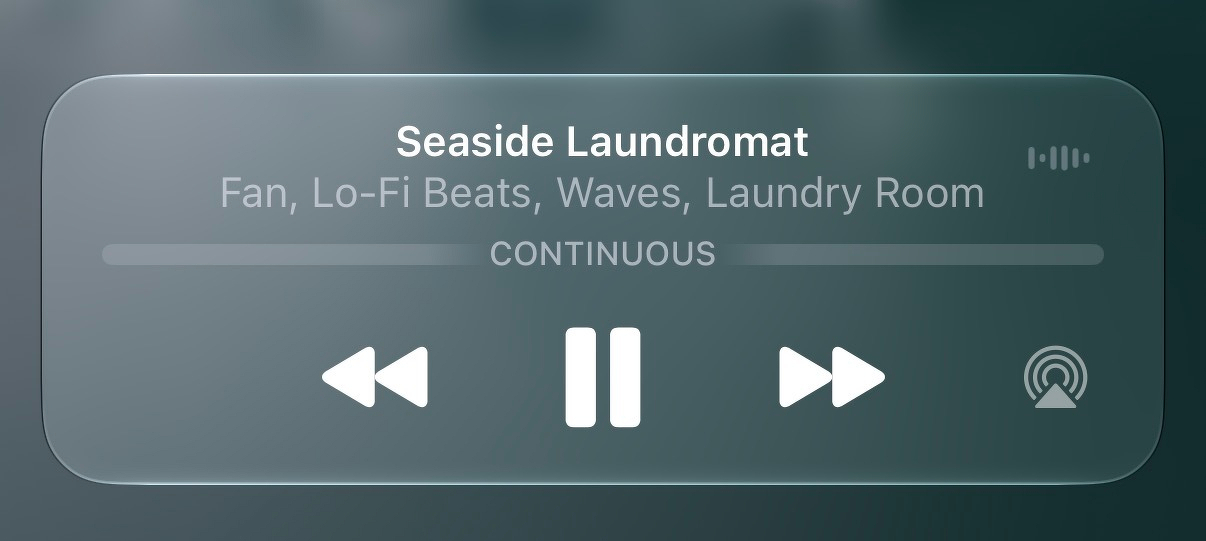
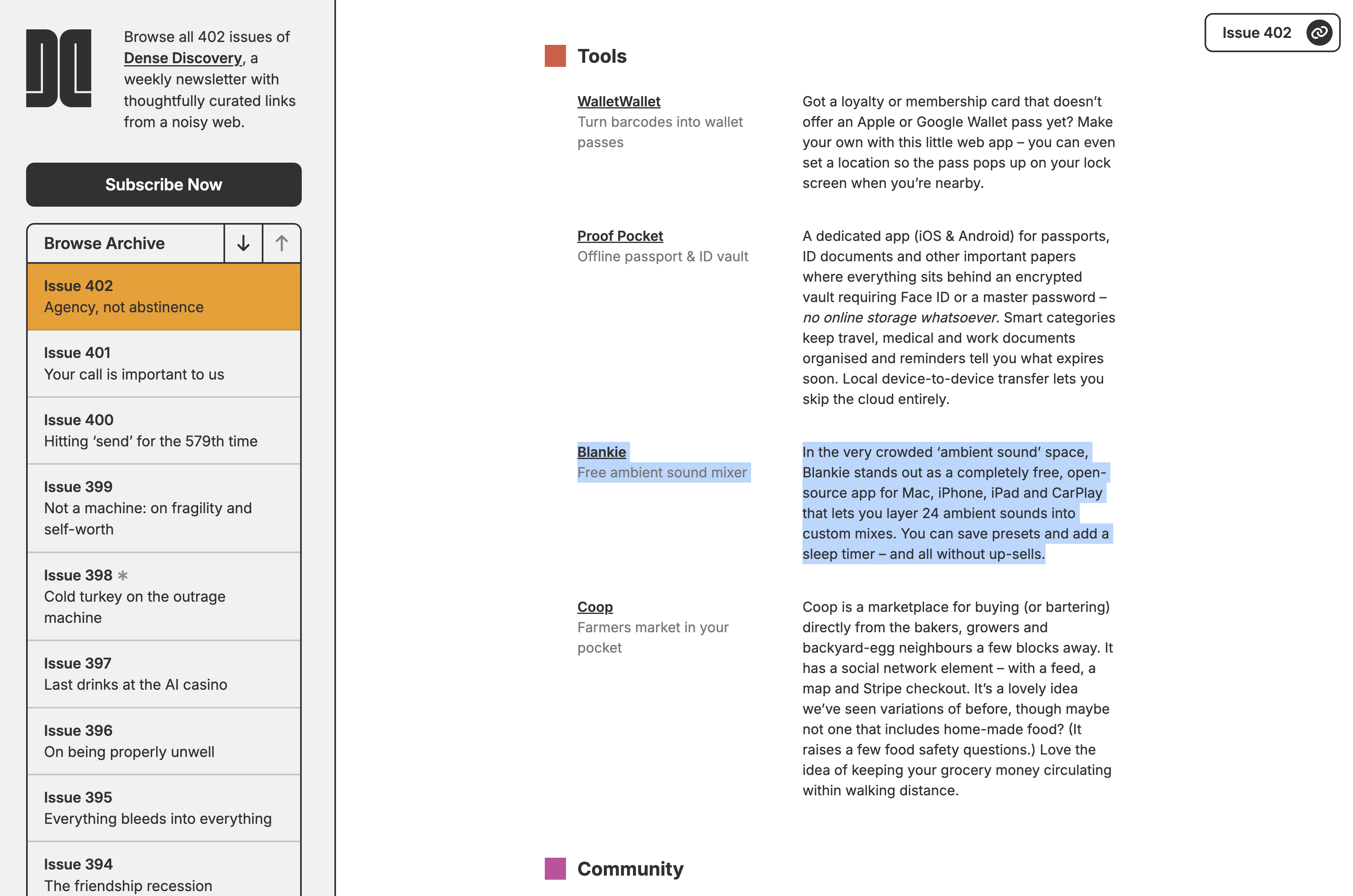
Many thanks to Dense Discovery for featuring Blankie in today’s issue!
-
Writing Requires Restraint
From the birdwatching colophon:
Posts are written in Markdown because writing requires restraint.
I added some new pages to the site recently, including a colophon. I’m pretty sure the first time I ever saw the word “colophon” was the one on Daring Fireball. His is a lot shorter than mine.
Admittedly, I wrote a colophon to be like all the other cool kids, but I’ve always loved the concept and am excited to have one of my own.
The quote from my colophon above is one of the core ideas of this blog. Constraints can be a good thing.
One of the things I’d say I loved now, but hated at the time, was my university newspaper’s hard print deadline. If I didn’t have the files on the FTP server by 5pm, there simply would not be an issue. Plenty of mistakes are more forgivable than not printing. To work at the paper was, more than anything, to work for the stress of that deadline.
When I graduated college, I fully expected I’d land in a newsroom somewhere where the always-on, deadline-driven kind of work never ceased. The corporate marketing job I landed instead still had deadlines, but they might be weeks or even months away. When I have too much time to work on an idea, it doesn’t become richer, and more defined. It languishes, rotting in my drafts folder before it ever gets the chance to actually be flawed. Ze Frank called this “brain crack.”
The reason my college paper’s deadline was effective for me is because it was externally imposed and had real consequences. Writing for myself is neither. But with this blog I do have two key constraints I’m willingly adopting:
Constraint 1: I can’t host the blog (and allow hosting it to become its own hobby)
Constraint 2: I should only write in Markdown.
Markdown is a famously opinionated plain text alternative to rich text markup. Earlier this year, Anil Dash wrote about how Markdown took over the world. He and Markdown’s creator, John Gruber, were also on The Vergecast to discuss some of Markdown’s history.
I love Markdown and have been using it more and more since I first tried Bear.app in 2017, though now I mainly use Drafts (for writing) and Obsidian (for knowledge keeping and organized notes). Gruber’s original version doesn’t have all the same functions as other “flavors” of Markdown (such as the version GitHub uses, or the CommonMark spec), but they all have a common goal: the text you type with a standard keyboard should more or less resemble the formatting it would render.
Markdown doesn’t reliably solve for every type of common text formatting (hence the opinionated-ness). Notably, most “flavors” of Markdown don’t even have a standard way to underline text. Other things like tables, LaTeX and certain kinds of images and embeds vary in compatibility, but still aren’t that easy to do by hand. These range from difficult to type/scaffold on your own or are highly specific to certain flavors.
Ultimately, this is the key tradeoff of the format, and to me it’s a feature. I don’t think this blog needs all of those formatting options anyways. My intention is to limit formatting in posts to “standard” Markdown. Some non-post page content may break this rule sparingly.
My colophon states that my goal is to write at least twice a week. A pretty low bar if I count short/micro posts. I’d really wanted to commit to at least do 300+ words in a fuller post like this one with some regularity but I intentionally didn’t. I’m still easing back into writing and I wanted to set the bar low enough that I will always be able to clear it. At some point, hopefully, I’ll have done this for so long I can’t stop. I’ll raise it then, and no earlier.
Setting big, lofty goals is one of my biggest personal failure modes. So this time, I set a small one.
Writing requires restraint. Every kind.
-
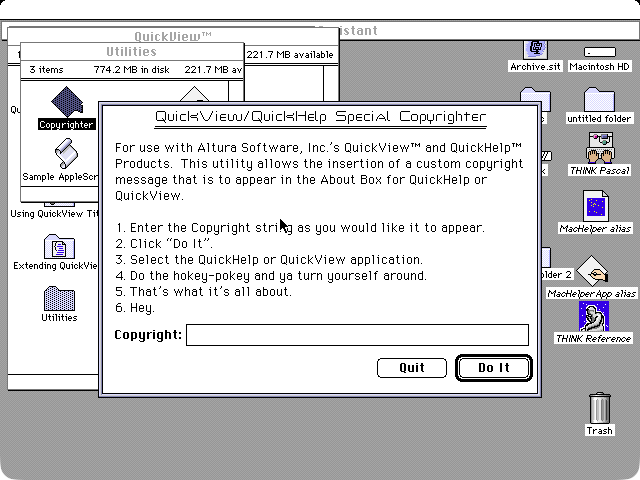
When people say the Mac was weird and funny in the early 90’s, it’s stuff like this little utility from Altura Software that they were talking about.
-
I’ve been working on some classic Mac projects but I kept tripping over text encodings. My toolchain for the projects is Rust and assumed there’d be a solid, maintained crate for this, but I couldn’t find one. So I made one that follows Apple’s official Unicode maps.
-
Plenty of people are aware of Clarus the dogcow (who says “moof!”), but I bet far fewer have ever laid eyes on a Wild Eep.
-
I tried writing with AI, but I quit immediately because they suck at it. LLMs are good at structure, that’s how they convince us they’re smart, but without empathy it reads hollow. If fear of watermarks make people write for themselves again, I say that’s a good thing.
-
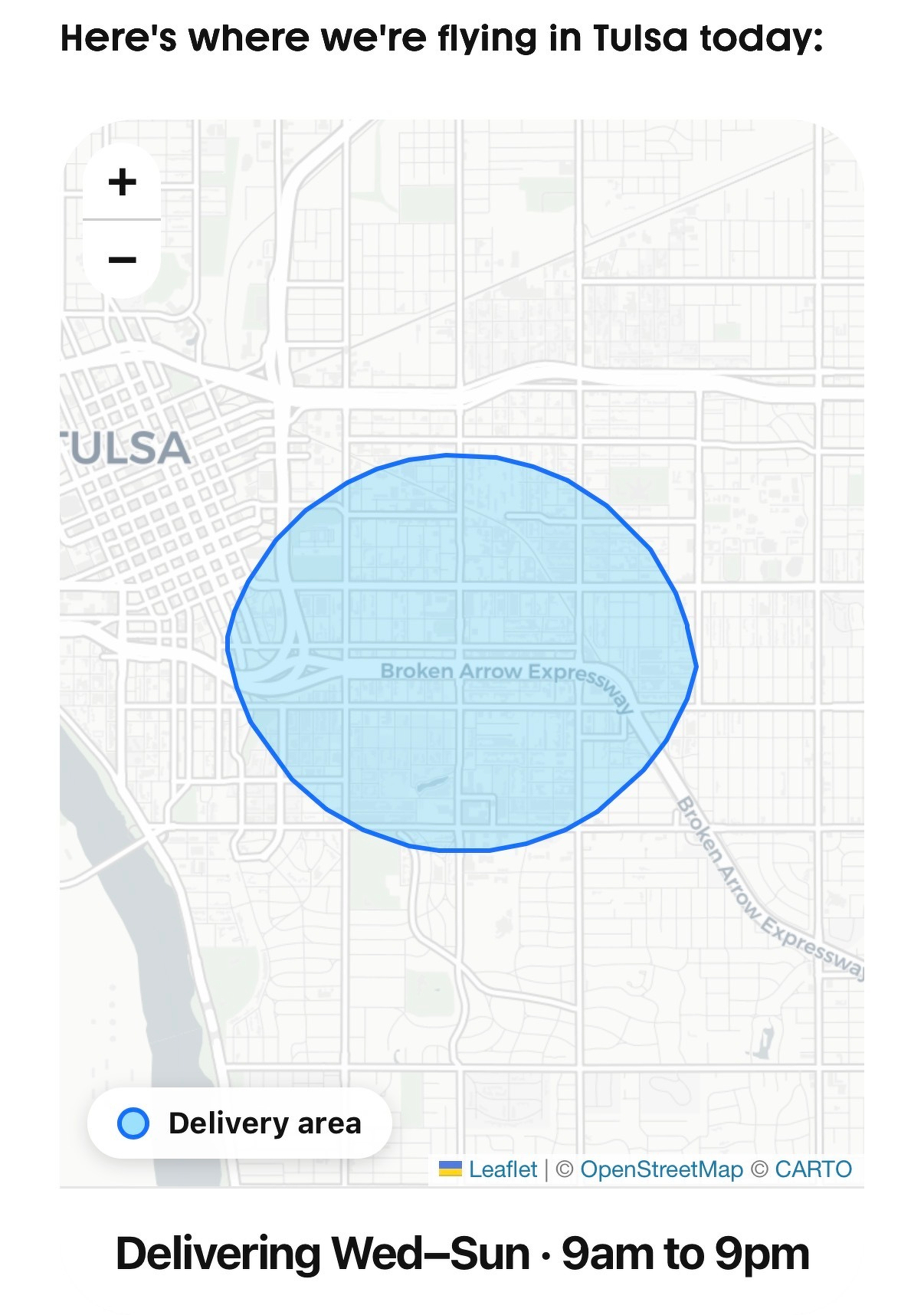
Looks like I won’t be able to try Manna’s drone delivery today in Tulsa because I don’t live or work inside the very small launch area. Excited to give it a try when they expand it a bit.
-
Manna drone delivery launches today in Tulsa.
I first learned about Manna last year when Ben Thompson interviewed the CEO. Now 18 months later, it’s crazy to see Tulsa in a list like this. Cue the Sesame Street song. ”One of these things is not like the others…"
-
How to start smoking RSS feeds
Continue reading →Someone on NetNewsWire’s Discourse site recently asked, “How to find motivation for reading feeds?” Below was my response.
As a longtime RSS addict, this question reads to me like “how can I start smoking cigarettes?”
I was nigh-endlessly scrolling newsfeeds before I was endlessly scrolling social media, so in some ways they’re the same to me. But what sucks me into social media more than my newsreader are the notifications. Notifications ends up making social media a destination about me as much or more than a place to stay up on news, friends and my interests. I really should turn more of them off. One of my worst app habits is to always agree to turn them on under the belief that I’ll turn them off if I dislike them (except I never do the second part).
-
Claude to add “imperceptible” watermarks to text outputs in the EU
How Claude marks AI-generated content:
When a supported Claude model generates text, it weaves an imperceptible watermark directly into the text itself. You won’t see it, and it doesn’t change the meaning, quality, or readability of Claude’s response.
Because the watermark is part of the text, it will travel with the text when it’s copied and pasted elsewhere, and may persist through some editing. Watermarking will be applied at the model level, which means it will be present no matter which Claude product or surface the text comes from.
Today Anthropic rolled out a new support page aimed at users in the European Union as part of signing the EU AI Act’s Article 50(2) Code of Practice on Transparency of AI-Generated Content. The new watermarking will apply to Claude models launched in the EU on or after August 2, 2026. Existing models are covered by a transition period but Anthropic says they’re working to add marking support to them too.
While I understand the concept of how this can work in theory, how it would actually work in practice is mind boggling. Even more so that this will apply even to API outputs from providers like AWS, Microsoft and Google.
How many characters will you have to use for something to be detectably Claude-marked? If I asked Claude to reply only with a single character, how can we be sure it’s marked? The answer is that we don’t know yet, and perhaps Anthropic has really just shipped an CYA page, especially as it pertains to marking older models.
Everyone seems to have an opinion on the effectiveness of “AI detectors” these days, but it will be interesting to see how well Anthropic’s works. If it’s any good, I expect other large economic powers will come knocking.
But I don’t see how the marking system they describe can be any good. Unless the Claude mark is complete gobbledygook (and they said it won’t be), there’s plausibly already text somewhere that would “match” this mark that wasn’t created by Claude. What’s the point of a mark if it’s more likely to cause confusion than no mark at all?
Imagine an author submits their original work to a publisher and they check it against an official Claude mark detector. Even a work with no use of AI whatsoever could may still not pass 100% because there’s nothing preventing someone from choosing the same words Claude might. And if doing so you choose to believe the author, why even check it in the first place?
So far it sounds like a system that solves for a very specific regulatory requirement, but no real problems. I’d anything, it might actually create more problems.
The case for open models just keeps getting better and better.
-
My blog officially has a new name: birdwatching. The domain (b10g.xyz) is still the same. I’d been considering changing the name for about 4 years, and with all the other changes it felt like maybe the right time to finally do it.
-
Simon Willison on Technical Blogging
Simon Willison recently reshared some advice he gave in an interview:
My number one tip for blogging is to lower your standards! Aim to hit publish while you are still actively unhappy with what you have written, because the only alternative is a huge folder full of drafts and never publishing anything at all.
The number one reason I’ve not published more on my blog was that I kept thinking it still needed something. Moving to Micro.blog is in large part a way for me to lower my own bar, and write more on my blog and less just on social media.
-
Why I moved to Micro.blog
Last week I was talking to my friend Josh about blogging and our conversation was self-inspiring enough that I decided to set up another blog.
Well, now my new blog is my old blog too. For the past few years, I’d been occasionally posting at b10g.xyz using a multiple blog platforms hosted on various cloud services over a span of four years. The version I retired last week was hosted on Cloudflare Pages with a site statically generated using Lume from Markdown files I kept in a private GitHub repo. Over the blog’s life, I’d also used Astro and Next.js on Vercel, hosted the current version for a bit on Deno Deploy, and briefly experimented with Emdash. This final version was what worked the best for me. Moving isn’t an indictment of Lume, Cloudflare, or even using Markdown in Git as a CMS. All of those things are great, except maybe the last one, and I still recommend them wholeheartedly. Just not for me.
I originally wasn’t planning to migrate, because that felt like “fixing” something that wasn’t exactly broken. But something was broken. Even though I’d published more blog posts in the last year than I had in a while, I’d come to realize that my self-managed setup lacked restraint. Any feature or tweak I wanted to add, I could. And with the help of AI agents, I often did. What I ended up with was more than enough to validate my desire to write, but I wasn’t publishing all the things I wanted to write because managing what I’d built took more of the time. I still have drafts in my Notes.app that never saw the light of day because actually publishing involved sitting down at the right machine and doing a few manual steps that I couldn’t easily do on mobile.
I’ve learned too late in my writing journey that wrangling your workflow
canwill drain your capacity for writing and creating if you let it. I really enjoy building platforms. It’s my day job. But I want writing to be joy, not more work. Micro.blog as a platform is exactly what I want. It’s available anywhere, it helps me syndicate to my various social accounts, it has no ads or built-in analytics, but most importantly… it has constraints I can’t change. I’m so excited I signed up for an annual subscription.Building was fun, but I think writing will be even more fun.
-
I’ve mostly finished redesigning b10g.xyz after moving to Micro.blog. Their platform doesn’t have built-in analytics and I won’t be adding any of my own. The only measurement I care about is how many days a week I’m posting. My goal is for it to not dip below two.
-
The Death of Compromise
Continue reading →The industries built to help facilitate third spaces in our communities keep getting bought out and shut down. When I think about my stint at Blockbuster during college, I like to joke that I was one of the last employees. It’s not not true. Blockbuster filed for bankruptcy in 2010 and I was working at one of Tulsa’s last remaining stores until it closed sometime in 2011.
Josh and I have been friends since high school and I remember occasionally going to visit him at his Blockbuster before it closed. Even before they announced its closing, the store felt like a relative everyone expected to die soon but wasn’t comfortable discussing. His store finally closed in April 2011 on the same day as half of the 21 stores in the Tulsa metro area, including the one in Broken Arrow I always went to as a kid. I was sad, but I hadn’t rented anything from a Blockbuster it probably 4 or 5 years.
It’s easy to look back and say Blockbuster should have innovated, and in my MBA program that’s exactly what my textbooks and professors said. They thought Blockbuster should have merged with someone bigger. Or they should get rid of late fees, or offer DVDs by mail, or do monthly subscriptions, or kiosks, or streaming. But Blockbuster actually did every single one of these. The reality is that they did these badly and too-late. Blockbuster did not die of a failure of imagination or even a failure to implement new ideas. Blockbuster died because consumer tastes were changing faster than they could.
-
rust-lang/rust is adopting an LLM policy
Jynn Nelson, writing for The “Inside Rust” Blog:
At the time of writing, there are 1,281 open PRs to rust-lang/rust. This represents a staggering amount of time invested by both authors and reviewers. We have long had the problem that there are more people who want to write code than people willing to review it. With the advent of LLMs, this problem only gets worse.
If you’re technically minded, the policy they agreed to adopt is an interesting read, but the overview has its own summary:
It’s fine to use LLMs to answer questions, analyze, distill, refine, check, suggest, review. But not to create.
-
Agents in the Loop
I dislike the phrase “human in the loop” because it cedes authority to the machines. Let’s flip the narrative. It’s our loop, we work the same way we always have, now we recruit agents to join the team. An agent-assisted process need not be a black box that takes in prompts and emits features.
Jon made me realize how easily I accepted the term “human in the loop” in the first place. Of course we’re in the loop, we made the damn loops! Just saying “human in the loop” implies there might one day be a loop without humans at all, which some people are trying to sell but not many people want.
I tend to agree with Jon that “agent in the loop” is a more appropriate disclosure, but if AI was ever capable of doing what big tech said it could, we might end up saying “agent(s) in the loop.” Not because we rightfully acknowledge and wish to disavow machine-centric language, but rather that we would want to acknowledge when an AI agent was keystone reviewer of a loop. As of right now, humans are still better than AI at a large variety of important review tasks, and until that changes “human in the loop” is the better name because human operators are the most valuable part.
-
Two Things Can Be True at the Same Time
Continue reading →I’ve been a fan of Hank Green, and his brother John, since their “Vlogbrothers” series in YouTube’s early days. As well-meaning and well-spoken nerds, they rapidly assembled a community of like-minded terminally online followers. One channel quickly turned into a network, laying the groundwork for educational franchises like SciShow and Crash Course. But with a big audience and community, they’ve also made good. In 2012, the brothers launched a foundation aligned with their goal to “decrease world suck”, and since then it has granted $17 million to more than 100 charities. Earlier this year, Complexly, the company the Green brothers started to produce educational content for their channels and partners like PBS, became a non-profit after both brothers donated their equity in the company.
Which is why the recent fallout over Hank admitting to using ChatGPT for research feels like such a seismic internet event. Hank Green isn’t a faceless media conglomerate chasing a payout, he’s a beloved creator at the center of the internet’s fiercest debate about automation, scale, and burnout. Hank first addressed the issues in a reply to a tweet, but the original tweet to which Hank replied to was deleted, and later posted a longer Reddit apology, admitting he had fallen into an unhealthy habit of relying heavily on generated notes to keep up with his brutal publishing schedule. He announced a pause on several of his personal projects, conceding that “the level of dopamine I’ve been getting from interacting with LLMs… is not healthy for me or good for the world.”
-
I moved my blog over to micro.blog and I’ve ported over my social replies-as-comments system with it. I’ll share more about why I moved and how I set this up soon, but any public replies to this will show up on my site.
-
I’m taking up blogging again because the alternative was sending my friends extra-long text messages. They’re too nice to complain, but if I dump my thoughts into a blog instead I can simply send them a link they can give a thumbs up reaction. It’s a win-win.
-
"Aha! This office supplies purchase will surely cure my writer's block!"
(This post was originally on codybrom.micro.blog before I migrated b10g.xyz to micro.blog)
In the middle decades of my life so far, sometimes I’d become so feckless that I’d yearn to bedrudge my innermost angst in some kind of ruled book for notes. Each time I performed this ritual, and I must confess it was many times, I’d say to myself, “Aha! This office supplies purchase will surely cure my writer’s block.” Dear reader, it did not.
Somewhere along the way, I stopped buying new journals and notebooks. Not because I didn’t want to, but simply because it became too depressing to look at how wasteful it had become. I expect the good people at Field Notes in particular enjoyed some lavish parties at my expense.
But weirdly, I’ve never held any contempt for any of the blogs I’ve started and abandoned. My Xanga, then the blogs feature of MySpace, various iterations of self-hosted “tumble”-logs, Tumblr (obvs), multiple Wordpress sites and even now, as I write this, I technically already have a blog. The problem with my newest one is I almost never write for it because that requires me to commit MarkDown files to a GitHub repo, something I can’t do comfortably from most places. But that was the issue I had with the others as well. They were always a very specific place that was harder to write to anytime, and often required needlessly more formality to post than not.
I thought it was easier to buy a new journal than to deal with the sense of failure I felt about the last one. I suppose this post is also mostly journaling, and not “blogging” though I think I forget what the distinction is (if there ever was one).
Maybe this platform subscription will finally cure my writer’s block.
-
the end of the singular iphone
Continue reading →For most of the twentieth century, you couldn’t buy a Coca-Cola in the Soviet Union. It was one of the most American things in existence, and like Levi’s and Michael Jackson, the Iron Curtain kept it out.
-
the yak is back
Continue reading →Today is Apple’s 50th birthday. Tim Cook shared a letter about “50 Years of Thinking Different.” There are animated homepages, Paul McCartney concerts at Apple Park, commemorative t-shirts, David Pogue just published Apple: The First 50 Years and there’s a lot of well-earned celebration for a company that really has put a dent in the universe.
But I’ve been thinking different about a lost side of Apple’s legacy. The side that hides yaks in software.
-
bruce the wonder yak didn't understand when it wasn't weird
Continue reading →On the Macintosh episode of Version History, David Pierce and Nilay Patel had a lot of fun riffing about Mr. Macintosh, Steve Jobs’s obscure concept for a digital cryptid who lives in your computer.
About 15 years later, Apple actually shipped something very similar, except instead of a mysterious little man it was a yak named Bruce.
-
nobody on linkedin called out my AI slop
Continue reading →If you interacted with my last LinkedIn post, I owe you an apology. It was 100% AI slop.
This post isn’t, but here’s why I did it.
-
anthropic research subject #80,508
Continue reading →In December 2025, Anthropic invited Claude users to sit down with an AI interviewer and share how they use AI, what they hope it could become and what concerns them about where it’s headed. Over 80,000 people across 159 countries participated, and Anthropic recently published their findings.
The findings are about what you’d expect. People want AI to do their boring work and they’re worried it’ll take their interesting work. The things they love most about it are the same things that scare them. Anthropic’s term for this is “light and shade,” which is a polite way of saying nobody knows if this is going to be good or bad.
This more or less describes how I feel too, and that’s pretty relevant because I was one of the 80,508 people interviewed in this study.
-
it's not the future until it's boring
Continue reading →For a few years now, I’ve been chipping away at a historical research project about Will Rogers, the early 20th century humorist and one of the most widely read newspaper columnists in America. I find his story and his role in American cultural history fascinating, and as a fellow Oklahoman I feel somewhat obliged to help tell it. He died 91 years ago in 1935, so the vast majority of his life’s work has already rolled into the public domain, and the rest will soon. My project’s bottleneck has never been a lack of material, but getting access to it in the digital vaults where it is imprisoned. There are many paid-only, private databases that hold incredible, sprawling troves of public domain content but are barely indexed and have interfaces that seem almost designed to punish efficiency. Using them feels like the company is daring you to reverse engineer a better option.
-
your inbox is a disaster and it's not your fault
Continue reading →I used to judge people for their overflowing inboxes. You know those screenshots where someone’s mail app shows a gargantuan unread count? I’d cringe wondering why they wouldn’t just deal with it. How hard is it to stay on top of your email?
Turns out: very hard.
I’m in year two of working for a startup, which has meant a lot of late nights and weekends with less time for small but important tasks like working out, laundry, and deleting D2C email pollution. In less than a year I went from inbox zero to inbox disaster. I’d try to clean up here and there, but the Gmail app on my phone is barely equipped for it, and even the desktop web made deep cleaning surprisingly painful. The power was there, it just took six or seven clicks and queries to reach it. It was so much harder than I expected that I built my own app to help (more on that another time). I’ve finally got it down from 14,500+ emails to 14 and I can breathe again, but I have a lot of thoughts about how I got here in the first place.
-
revisiting agentic ai: hype or help?
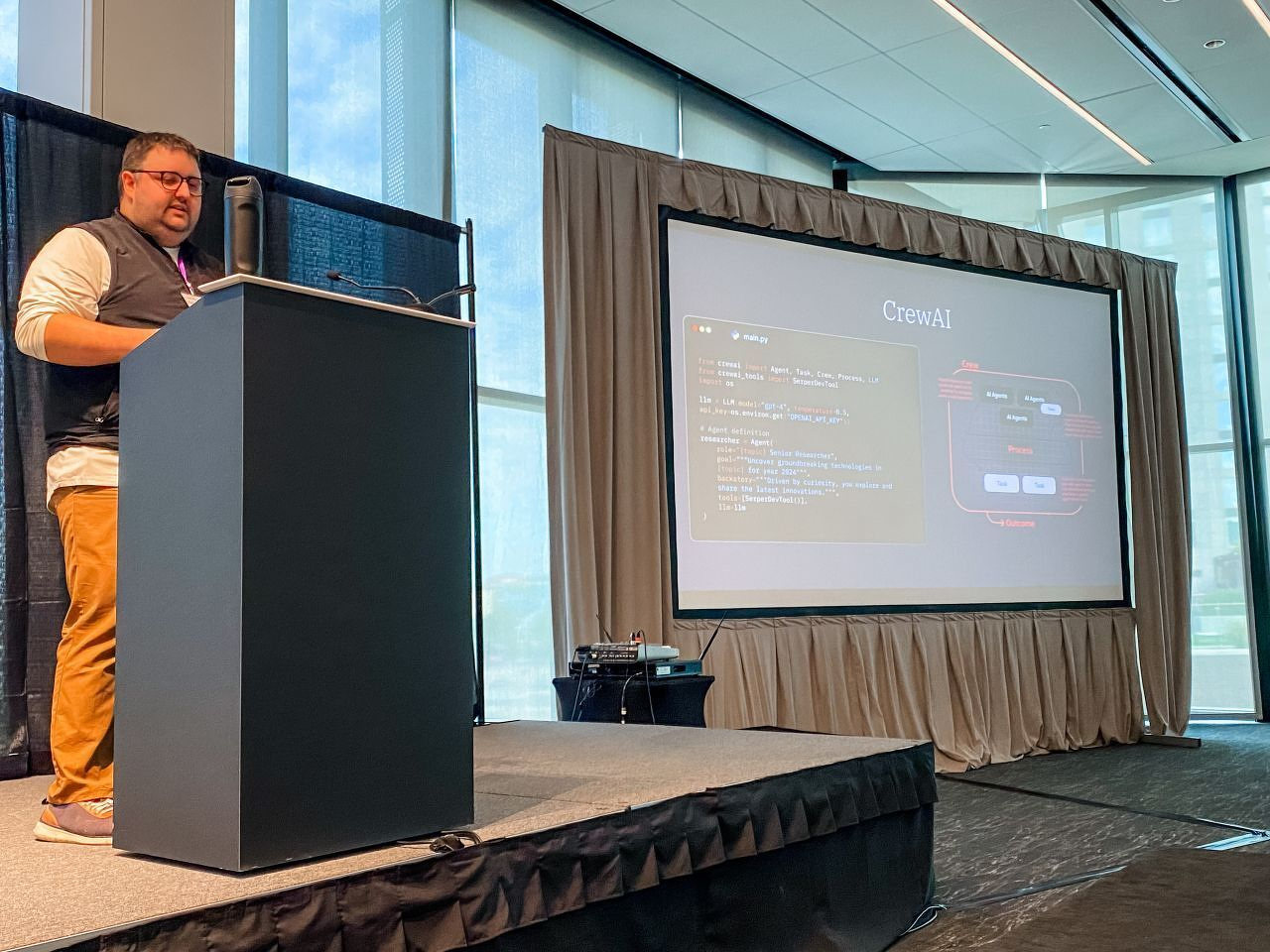
Continue reading →The most profound insights about technology often come from direct experience rather than theoretical analysis. Last October when I gave my first-ever conference talk on agentic AI I emphasized process over code, specialized roles over general capability, and sequential collaboration over full autonomy. I was right about these architectural principles, but for entirely wrong reasons. The real limitations turned out to be more fundamental: accountability, security and an imperceptible line between capabilities and constraints.
-
for sale: google chrome, never monetized
Continue reading →The DOJ is about to drop the biggest antitrust bomb since Microsoft’s Internet Explorer case.
In the late ’90s, bundling IE with Windows licenses played a big role in getting Microsoft labeled a monopoly and for good reason. IE’s complete stranglehold peaked at ~95% market share (150M users). Today Chrome’s “mere” 65% translates to 3+ billion users and gives Google far more control over the web than IE’s team could dream of.
The DOJ’s ideal solution? Make Google do what Microsoft probably should have done: spin off or sell off their browser.
But my question is: who on Earth could even buy it?
-
automation is obsoletion (in a mostly good way)
Continue reading →I’ve spent a lot of time this year pondering AI’s impact on labor, especially in professional fields like mine.
While it’s a bit unsettling, history is clear: automation leads to obsolescence.
-
finding my speaking voice
Continue reading →
Me speaking at Thunderplains 2024 - Photo by Natasha Martin This week, for the very first time ever, I spoke at a conference. And not just any conference, Oklahoma’s largest developer conference: ThunderPlains.
-
ccTLDs are risky business
Continue reading →There’s been a lot of chatter lately about the future of the
.ioccTLD. The top-level domain was originally created as a country code top-level domain for the “British Indian Ocean Territory”, but like history tells us, countries are not forever and that means ccTLDs aren’t either. Should a treaty by the UK government be passed, the islands would become part of Mauritius, ending the need for the.iodomain. -
Some parting thoughts as I leave the me.dm server.
I am thankful to @[email protected] & team for bravely dipping a toe into the Fediverse with a paid server. The same week @[email protected] announced this server the first rumors of Threads dropped. Amazing how much can happen in under a year!
It’s not popular, but finding reasonable and fair ways to monetize (or subsidize) the Fediverse is hard and necessary. Users and operators need a common and shared interest to not repeat the mistakes of old media.
-
This is the last regular public post to this account. Please follow me over at @[email protected] where I’ll continue taking about product, tech, the Fediverse and the state of Oklahoma of all places. ✌️:medium:
-
It’s more complicated for readers. They stand to benefit from the network effects that come from bundled products like Apple News+ or NYT All Access. One subscription with “everything” is always a tempting bargain for the hungry and savvy consumer. @medium can do the same, or better, but first they have to become an ever better place for writers on the Internet. I won’t pretend I know what that means, but I strongly believe that if you build it they will come.
-
#Threads will subsist and profit from ads, but @medium’s ad-free, tracker-free server powered by a subscription is open, honest and a real value with the rest of what a Medium subscription includes.
I honestly believe Medium‘s best days are still ahead. High-quality content has to be protected against LLM theft. So far the only proven way to do that is with a paywall. There’s a lot of great newsletters out there, but for more sporadic and occasional authors Medium has an pretty amazing setup.
-
I have decided to conclude my experiment of using the me.dm Mastodon server. In a few days I will activate a migration to my main account @[email protected]. Go give it a follow if you haven’t already to speed up the process.
What I really want to say is that leaving is not meant as a referendum on Medium or this specific community, though I do have a few thoughts. Instead, I’m leaving because I’ve come to the conclusion that fracturing my digital identity isn’t helpful.
-
How do folks on the me.dm Mastodon instance feel about their posts potentially federating with Threads?
Obviously anyone can answer, but would mainly prefer to hear anyone with an @me.dm account’s thoughts, especially @[email protected].
-
@coachtony Will me.dm federate with #Threads?
-
On my primary account I replied to a thread about that instance potentially blocking #Threads and I’ve received more than one reply saying I should just move instances.
What an anti-social network.
-
As a product person I’m very excited for the launch of #Threads. There’s gonna be a lot we can learn from it: good and bad. But to learn anything (both life in and in regard to this), we have to be open to the possibility that our current beliefs CAN be wrong.
-
I've been wondering for a while what to do with this account, and I may have just figured it out. There's a lot of hubbub about Threads and a not insignificant number of Mastodon admins are planning to block it from federating with them and my home instance is now debating it.
I wait until the dust settles, but since I haven't heard anything about defederation here... maybe this becomes home.
-
I’m not sure what to do with this extra Mastodon account. I can’t subdivide my brain into two different categories of posts, but I really love Medium’s attention to the Fediverse and the domain name.
A few OK-based admins tried to recruit me to their instances, but since my posts aren’t yet portable I’m not that interested in moving. Plus, I’m super happy at mstdn.social.
In any case, I just wanted to say I still have some love for this place. If my identity does portable, it could be my home.
-
vision pro-dictions
Continue reading →Yesterday Apple announced the new Vision Pro spatial computer (aka headset). One of the things I do at my job is kind of try to predict the future, or at least imagine how to get ahead of it so we can make the right moves today. With that, I’ve been assembling some predictions (most of which I assume will be proven wrong very quickly) on how I think the Vision Pro will change the current state of product, experiences and technology.
-
the second screen
Continue reading →A few months ago I started writing a blog post that is probably never gonna get finished and so this is my attempt to rewrite it while it’s relevant and force myself to finish.
-
what is wx.watch
Continue reading →This post was originally posted as a thread on the wx.watch Mastodon account.
I guess I’ll start at the beginning. What is wx.watch?
Short answer: I want to make staying up-to-date with NWS weather alerts easier.
Long answer:
In 2009, I didn’t have a smart phone, but wanted to be as weather alert as possible. This was before NWS was on Twitter or emergency phone alerts were a thing so, I set up IFTTT to send me a text message whenever NWS added a new alert item to an ATOM feed for the area that covered my college. Versions of this setup worked well for most of the last decade but changes at IFTTT kinda forced my hand.
When I started using IFTTT, the feed was supposedly being checked every 15 minutes (or more often). For weather alerts timeliness is everything and since I was using IFTTT for free I didn’t mind a mild time delay. Unfortunately, over time this frequency would start slipping. By the end of my use of IFTTT I was getting alerts hours after they were issued, rendering them pretty worthless.
-
This was an interesting read because it acknowledges that AI tools like #ChatGPT will more likely augment our work instead of replacing it.
https://www.wsj.com/articles/the-jobs-most-exposed-to-chatgpt-e7ceebf0
-
In celebration of joining me.dm, here’s the only time I’ve posted to @[email protected]. It made the front page as an editor’s pick and made my whole damn week. People still love to #BulletJournal and maybe it will convince you to try it too.
https://medium.com/@codybrom/my-week-with-bullet-journal-9a8645c914a8
-
Haven’t decided what I want to do with this account just yet, but wanted to make good on what I said. What @[email protected] is doing in the #fediverse is worth supporting and I’m here for it.
-
stateful-less-ness
Continue reading →The statelessness of modern hardware design really annoys me.
-
wtf is b10g?
Continue reading →I’ve wanted to write about things for a while. Product things. Art things. Tech things.
The barrier that held me back was a solid place to publish. I’ve used several dozen digital publishing platforms but none of them ever felt right, or more importantly mine.
The recent leadership change at Twitter served as a good reminder that the platforms you don’t own are terrible places to leave your data. So, I’ve chosen to not do that. This blog isn’t on a fancy new blogging platform, but it is my attempt to build one I want.