I sold cell phones at Best Buy when the first iPhone launched. We didn’t carry it, but you wouldn’t believe how many people asked if it was compatible with their allergy medication.
tech
-

-
'Til the Clouds Come Home
Continue reading →My family first got online with Prodigy dial-up when I was 8. We connected to it via a local phone number, and so I thought that meant the offices of our local phone operator down the street was where “internet” lived. As I got older I began to understand it was far more complex than that.
One of my next-door neighbors growing up was a tall man named Craig. He spoke in a loud, but friendly, North Carolina accent that likely wouldn’t make you think he was the kind of guy who gets really into computers. With his characteristic strawberry-blond horseshoe mustache, he looked, talked and even dressed like a long-lost cousin of Dale Earnhardt.
But in the same way my dad just knew how to work on any car, Craig knew computers. Every so often he’d help my family out, upgrading our first desktop from a 2GB hard drive to 8GB and later helping us make the jump from Windows 95 to Windows 98.
I’ve been thinking about Craig recently because he was the first person I ever knew who worked in a data center. When I think about data centers, I still picture them exactly the way he described them: large, cold rooms filled with rows of whirring computers packed into racks and watched over day and night by people like him.
I can’t remember where Craig worked, and I may not have known at the time. For all I know, what he oversaw was a private network for a single company and not even part of the public internet. But the image sticks with me because it was likely the first time I understood, even vaguely, that rooms full of computers somewhere were doing something important enough that somebody had to watch over them day and night.
-
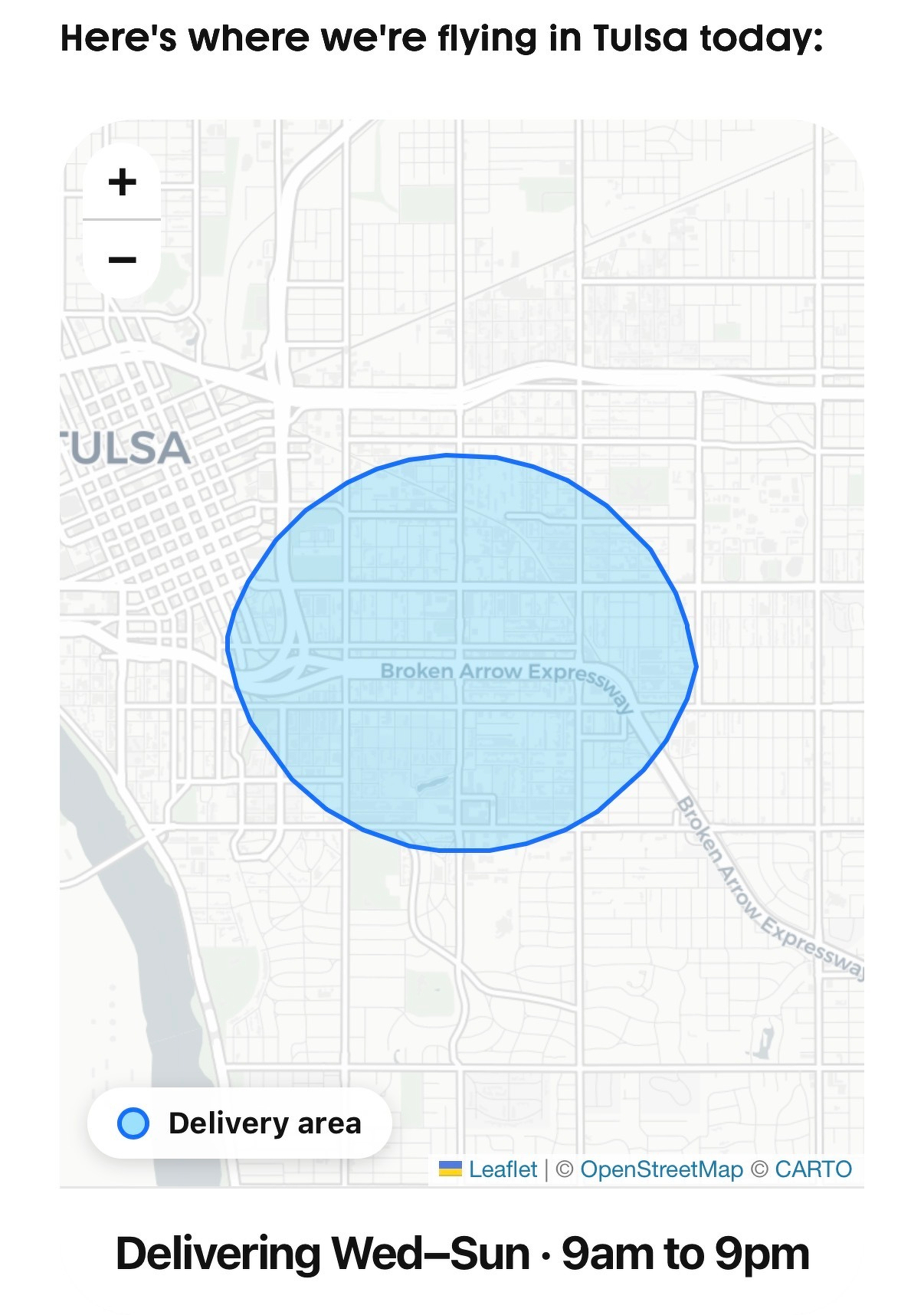
Looks like I won’t be able to try Manna’s drone delivery today in Tulsa because I don’t live or work inside the very small launch area. Excited to give it a try when they expand it a bit.
-
Manna drone delivery launches today in Tulsa.
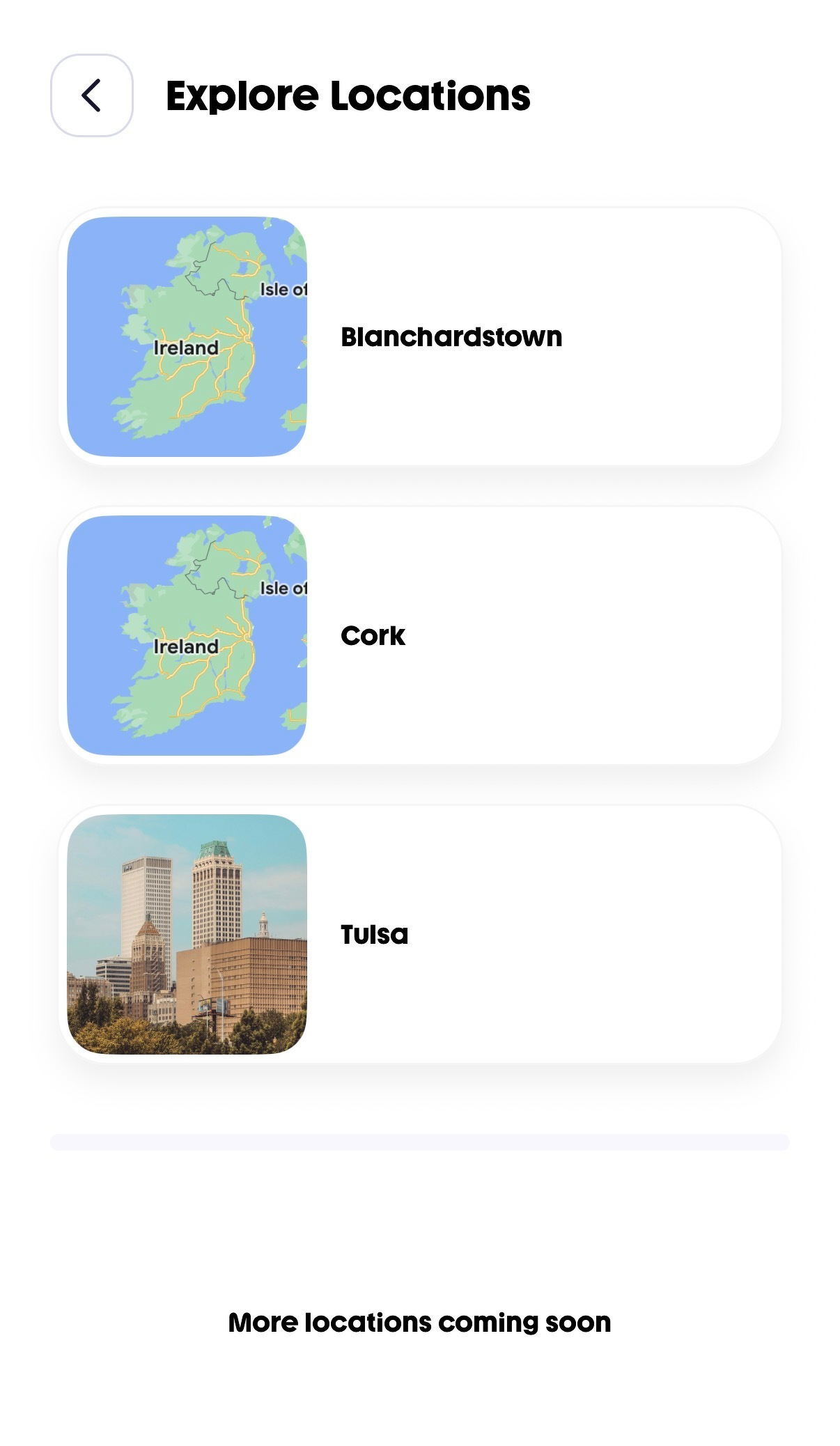
I first learned about Manna last year when Ben Thompson interviewed the CEO. Now 18 months later, it’s crazy to see Tulsa in a list like this. Cue the Sesame Street song. ”One of these things is not like the others…"

-
Claude to add “imperceptible” watermarks to text outputs in the EU
How Claude marks AI-generated content:
When a supported Claude model generates text, it weaves an imperceptible watermark directly into the text itself. You won’t see it, and it doesn’t change the meaning, quality, or readability of Claude’s response.
Because the watermark is part of the text, it will travel with the text when it’s copied and pasted elsewhere, and may persist through some editing. Watermarking will be applied at the model level, which means it will be present no matter which Claude product or surface the text comes from.
Today Anthropic rolled out a new support page aimed at users in the European Union as part of signing the EU AI Act’s Article 50(2) Code of Practice on Transparency of AI-Generated Content. The new watermarking will apply to Claude models launched in the EU on or after August 2, 2026. Existing models are covered by a transition period but Anthropic says they’re working to add marking support to them too.
While I understand the concept of how this can work in theory, how it would actually work in practice is mind boggling. Even more so that this will apply even to API outputs from providers like AWS, Microsoft and Google.
How many characters will you have to use for something to be detectably Claude-marked? If I asked Claude to reply only with a single character, how can we be sure it’s marked? The answer is that we don’t know yet, and perhaps Anthropic has really just shipped an CYA page, especially as it pertains to marking older models.
Everyone seems to have an opinion on the effectiveness of “AI detectors” these days, but it will be interesting to see how well Anthropic’s works. If it’s any good, I expect other large economic powers will come knocking.
But I don’t see how the marking system they describe can be any good. Unless the Claude mark is complete gobbledygook (and they said it won’t be), there’s plausibly already text somewhere that would “match” this mark that wasn’t created by Claude. What’s the point of a mark if it’s more likely to cause confusion than no mark at all?
Imagine an author submits their original work to a publisher and they check it against an official Claude mark detector. Even a work with no use of AI whatsoever could may still not pass 100% because there’s nothing preventing someone from choosing the same words Claude might. And if doing so you choose to believe the author, why even check it in the first place?
So far it sounds like a system that solves for a very specific regulatory requirement, but no real problems. I’d anything, it might actually create more problems.
The case for open models just keeps getting better and better.
-
I moved my blog over to micro.blog and I’ve ported over my social replies-as-comments system with it. I’ll share more about why I moved and how I set this up soon, but any public replies to this will show up on my site.
-
the end of the singular iphone
Continue reading →For most of the twentieth century, you couldn’t buy a Coca-Cola in the Soviet Union. It was one of the most American things in existence, and like Levi’s and Michael Jackson, the Iron Curtain kept it out.
-
anthropic research subject #80,508
Continue reading →In December 2025, Anthropic invited Claude users to sit down with an AI interviewer and share how they use AI, what they hope it could become and what concerns them about where it’s headed. Over 80,000 people across 159 countries participated, and Anthropic recently published their findings.
The findings are about what you’d expect. People want AI to do their boring work and they’re worried it’ll take their interesting work. The things they love most about it are the same things that scare them. Anthropic’s term for this is “light and shade,” which is a polite way of saying nobody knows if this is going to be good or bad.
This more or less describes how I feel too, and that’s pretty relevant because I was one of the 80,508 people interviewed in this study.
-
for sale: google chrome, never monetized
Continue reading →The DOJ is about to drop the biggest antitrust bomb since Microsoft’s Internet Explorer case.
In the late ’90s, bundling IE with Windows licenses played a big role in getting Microsoft labeled a monopoly and for good reason. IE’s complete stranglehold peaked at ~95% market share (150M users). Today Chrome’s “mere” 65% translates to 3+ billion users and gives Google far more control over the web than IE’s team could dream of.
The DOJ’s ideal solution? Make Google do what Microsoft probably should have done: spin off or sell off their browser.
But my question is: who on Earth could even buy it?
-
finding my speaking voice
Continue reading →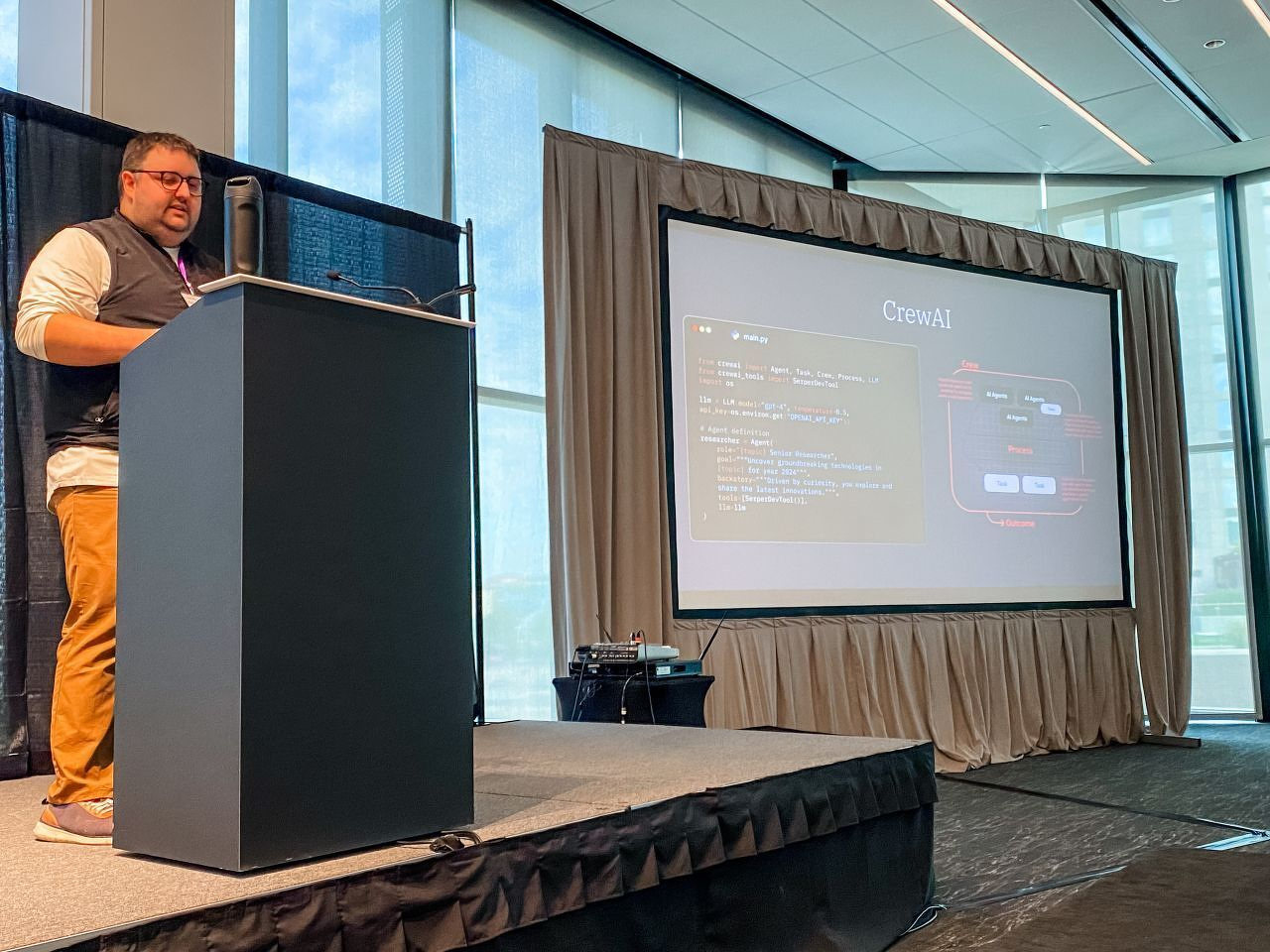
Me speaking at Thunderplains 2024 - Photo by Natasha Martin This week, for the very first time ever, I spoke at a conference. And not just any conference, Oklahoma’s largest developer conference: ThunderPlains.
-
ccTLDs are risky business
Continue reading →There’s been a lot of chatter lately about the future of the
.ioccTLD. The top-level domain was originally created as a country code top-level domain for the “British Indian Ocean Territory”, but like history tells us, countries are not forever and that means ccTLDs aren’t either. Should a treaty by the UK government be passed, the islands would become part of Mauritius, ending the need for the.iodomain. -
Some parting thoughts as I leave the me.dm server.
I am thankful to @[email protected] & team for bravely dipping a toe into the Fediverse with a paid server. The same week @[email protected] announced this server the first rumors of Threads dropped. Amazing how much can happen in under a year!
It’s not popular, but finding reasonable and fair ways to monetize (or subsidize) the Fediverse is hard and necessary. Users and operators need a common and shared interest to not repeat the mistakes of old media.
-
vision pro-dictions
Continue reading →Yesterday Apple announced the new Vision Pro spatial computer (aka headset). One of the things I do at my job is kind of try to predict the future, or at least imagine how to get ahead of it so we can make the right moves today. With that, I’ve been assembling some predictions (most of which I assume will be proven wrong very quickly) on how I think the Vision Pro will change the current state of product, experiences and technology.
-
the second screen
Continue reading →A few months ago I started writing a blog post that is probably never gonna get finished and so this is my attempt to rewrite it while it’s relevant and force myself to finish.
-
what is wx.watch
Continue reading →This post was originally posted as a thread on the wx.watch Mastodon account.
I guess I’ll start at the beginning. What is wx.watch?
Short answer: I want to make staying up-to-date with NWS weather alerts easier.
Long answer:
In 2009, I didn’t have a smart phone, but wanted to be as weather alert as possible. This was before NWS was on Twitter or emergency phone alerts were a thing so, I set up IFTTT to send me a text message whenever NWS added a new alert item to an ATOM feed for the area that covered my college. Versions of this setup worked well for most of the last decade but changes at IFTTT kinda forced my hand.
When I started using IFTTT, the feed was supposedly being checked every 15 minutes (or more often). For weather alerts timeliness is everything and since I was using IFTTT for free I didn’t mind a mild time delay. Unfortunately, over time this frequency would start slipping. By the end of my use of IFTTT I was getting alerts hours after they were issued, rendering them pretty worthless.
-
This was an interesting read because it acknowledges that AI tools like #ChatGPT will more likely augment our work instead of replacing it.
https://www.wsj.com/articles/the-jobs-most-exposed-to-chatgpt-e7ceebf0
-
stateful-less-ness
Continue reading →The statelessness of modern hardware design really annoys me.
-
wtf is b10g?
Continue reading →I’ve wanted to write about things for a while. Product things. Art things. Tech things.
The barrier that held me back was a solid place to publish. I’ve used several dozen digital publishing platforms but none of them ever felt right, or more importantly mine.
The recent leadership change at Twitter served as a good reminder that the platforms you don’t own are terrible places to leave your data. So, I’ve chosen to not do that. This blog isn’t on a fancy new blogging platform, but it is my attempt to build one I want.